
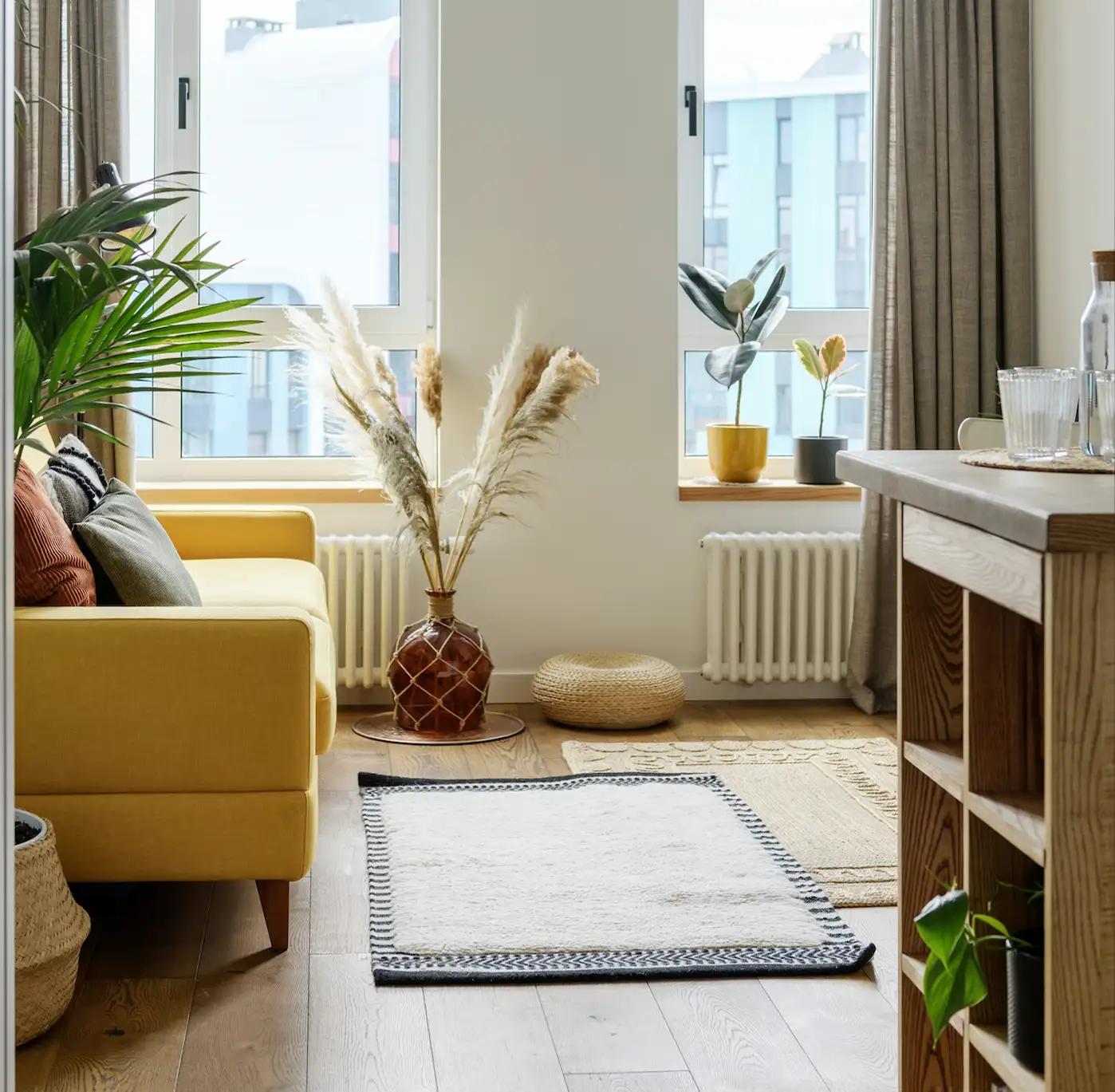
You’ve found the perfect apartment in Friedrichshain. Bright, affordable, available immediately. You email the landlord at 9 AM. By 3 PM, they’ve already scheduled 40 viewings and stopped reading new applications.
This is Berlin’s rental market in 2026: 50-200 applications per apartment, landlords who decide within 24 hours, and one truth: Missing a single document means instant rejection.
The good news? Most applicants submit incomplete applications. If you show up with the right documents, properly prepared, you’re already in the top 20%.
What You're Up Against
Document #1: SCHUFA Credit Report (Mandatory)
Document #2: Last 3 Pay Slips (Gehaltsabrechnungen)
Document #3: Employment Contract (Arbeitsvertrag)
Document #4: Copy of Your ID or Passport
Document #5: Previous Landlord Reference (Mietschuldenfreiheitsbescheinigung)
Document #6: Self-Disclosure Form (Selbstauskunft)
Document #7: Proof of Liability Insurance (Haftpflichtversicherung)
The Secret Weapon: The Bewerbungsmappe (Application Package)
Your Application Checklist
What Happens After You Apply
Next Steps: Actually Finding These Apartments
What You're Up Against
A Picture
The average successful applicant in Berlin today has:
- 12-15 documents prepared and ready to send.
- Applied to 30+ apartments before getting accepted.
- Spent €150-250 on document preparation, translations, and certificates.
The rental market moves fast. Landlords receive hundreds of emails within hours of posting a listing. They’re not looking for the “best” tenant but for the easiest decision, and it’s not uncommon that such is made on the spot. The applicant with complete, professional documents wins.
—Your job is simple: Be faster and more complete than the competition.
Document #1: SCHUFA Credit Report (Mandatory)
What It Actually Is
The SCHUFA-BonitätsAuskunft is Germany’s credit score system. It shows landlords your payment history, any debts, and whether you’re financially reliable. In Berlin, 99% of landlords require this before they’ll even consider your application.
The Mistakes That Cost You the Apartment
—Mistake 1: Showing the free SCHUFA (Datenkopie nach Art. 15 DSGVO). Landlords reject this immediately because it contains too much personal data and looks unprofessional.
—Mistake 2: Your SCHUFA is older than 3 months. Landlords want current information, and they’ll ask you to get a new one.
—Mistake 3: Not having one at all. If you’re new to Germany or don’t have German credit history, you need an alternative strategy.
How to Get It Fast
—Official route: Order from MeineSchufa, Sparkasse or ImmobilienScout for €29.95. Arrives by mail in 3-5 business days. This is the standard option.
—No German credit history? You’ll need a Mietschuldenfreiheitsbescheinigung (rent debt-free certificate) from your previous landlord (in case you rented before in Germany), plus bank statements showing 3-6 months of stable income. Some landlords also accept credit reports from your home country with certified translations.
Document #2: Last 3 Pay Slips (Gehaltsabrechnungen)
Why Landlords Demand This
German rental law allows landlords to verify you earn at least 3x the monthly rent. If rent is €1,200/month, you need €3,600+ net income. Pay slips prove this.
What They're Actually Checking
- Consistent employment: Same employer for 3+ months.
- Net income: After taxes. (Netto, not Brutto)
- Contract type: Unbefristet (permanent) beats Befristet. (fixed-term)
- Probation status: If you’re still in Probezeit, some landlords get nervous.
Common Problems and Solutions
—Problem: You’re self-employed or freelance.
—Solution: Provide your last 3 months of tax declarations (Einkommensteuerbescheid) plus bank statements showing regular income.
—Problem: You just moved to Germany and don’t have German pay slips.
—Solution: Employment contract (Arbeitsvertrag) showing your salary, plus a confirmation letter from your employer (Arbeitgeberbescheinigung) stating your start date and income.
—Problem: You’re a student or don’t meet the 3x rent rule.
—Solution: Get a Mietbürgschaft (rent guarantee) from parents or use a service like Bürgschaftsbank. Include proof of their income instead.
Document #3: Employment Contract (Arbeitsvertrag)
Your employment contract must be in German or have a certified translation. Find certified translations on the Marketplace. Landlords look for:
—Contract type: Unbefristet (unlimited) is gold. Befristet (limited) works if it extends beyond the lease period.
—Salary confirmation: Matches your pay slips.
—Start date: Proves you’re past probation period. (ideally)
—Company details: Legitimate German company address and tax ID.
Get an Arbeitgeberbescheinigung (employer confirmation letter) on company letterhead stating:
- Your position and salary.
- Employment start date.
- Contract type. (permanent/fixed-term)
- Company stamp and signature.
This works as a temporary substitute, but have the actual contract ready to show at the viewing.
Document #4: Copy of Your ID or Passport
The Simple One
Landlords need to verify your identity. Provide:
- For EU citizens: Copy of both sides of your Personalausweis (personla document) or passport photo page.
- For non-EU citizens: Passport photo page + current visa or residence permit. (Aufenthaltstitel)
About the Copies
- Clear and readable. (no dark photocopies)
- Dated within the last 3 months.
- In color for residence permits.
Anmeldung (Registration Certificate)
If you’ve been in Berlin for more than a month, include your Meldebescheinigung (registration confirmation from the Bürgeramt). This proves you’re legally registered in Germany. Read here an article that shows you how to get the Anmeldung task done.
New arrivals: Don’t worry if you don’t have this yet, but mention in your cover letter that you’ll register immediately after moving in.
Document #5: Previous Landlord Reference (Mietschuldenfreiheitsbescheinigung)
The Document Landlords Trust Most
This is a certificate from your current/previous landlord confirming:
- You paid rent on time every month.
- You left the apartment in good condition.
- You have no outstanding debts.
How to Get It
From a German landlord: They know what this is. Send them a polite email requesting a “Mietschuldenfreiheitsbescheinigung” or “Mietbescheinigung.” Most provide it within 2-3 days.
From a non-German landlord: Send them a template letter (in English) asking them to confirm you were a good tenant, paid rent on time, and have no debts. Get this notarized if possible.
No previous landlord? If you’re moving from a WG (shared apartment) or subletting, get a written reference from the person you paid rent to, plus proof of payment (bank transfers).
The Red Flag
Not having this document raises suspicion. Landlords wonder: “Did they get evicted? Do they owe rent?” If you genuinely can’t get one, address this directly in your cover letter with an explanation.
Document #6: Self-Disclosure Form (Selbstauskunft)
What This Actually Asks
Although the self-disclosure is not legally mandatory, it is standard practice in nearly all rental agreements and can increase the chances of a successful application. The Selbstauskunft is a questionnaire where you declare:
- Current employment and income.
- Number of people moving in.
- Whether you have pets.
- Whether you smoke.
- Previous evictions or bankruptcies.
How to Handle Sensitive Questions
German law protects you from some invasive questions. You do not have to answer:
- Questions about pregnancy or family planning.
- Religious or political affiliations.
- Detailed information about previous illnesses.
If these appear on the form, you can legally answer “no comment” or leave them blank. However, you must answer truthfully about:
- Income and employment.
- Number of tenants.
- Pets. (landlords can legally refuse pets in many buildings)
- Previous rental debts or evictions.
Lying here can lead to immediate termination of your lease contract (fristlose Kündigung).
Where to Get the Form
Most landlords send you their own version. If they don’t, download a standard template here, and fill it out proactively.
Document #7: Proof of Liability Insurance (Haftpflichtversicherung)
Why This Matters
German landlords strongly prefer tenants with Privathaftpflichtversicherung (personal liability insurance). It covers accidental damage to the apartment: Water damage, fires, broken fixtures.
Getting It Fast
This insurance costs €5-10/month and you can sign up online in 10 minutes with providers like:
You’ll receive a confirmation certificate (Versicherungsbestätigung) by email. Include a copy of this in your application.
If You Don't Have It Yet
Mention in your cover letter: “I will obtain Haftpflichtversicherung immediately upon signing the lease.” Then actually do it, because it’s legally required for many rental contracts.
The Secret Weapon: The Bewerbungsmappe (Application Package)
Here’s what separates the top 10% of applicants: They send besides the documents a complete, professionally organized application package.
What's in a Winning Application Package
- Cover letter in German. (1 page)
- All 7 documents above organized with labeled dividers..
- Professional presentation. (clean PDF or physical folder)
- Contact information clearly visible on every page.
Landlords respond to these applications 3x faster than messy email attachments.
How to Write a Winning German Cover Letter (Anschreiben)
Your cover letter is the difference between getting a viewing or being ignored. Berlin landlords want one thing: Proof you’ll pay rent on time and cause zero problems. Keep it to 250 words maximum, three paragraphs in German:
- Who you are, your job, your income.
- Why this specific apartment fits your needs: Mention the neighborhood (i.e. it’s close to your job or you like it because it’s quiet), or a feature of the apartment to show you’re not mass-applying.
- Why you’re ideal: State you’re a non-smoker without pets (if true), quiet, reliable, and looking long-term. Use phrases like “fest angestellt” (permanently employed), “pünktlich zahlen” (pay punctually), and “langfristige Wohnung” (long-term apartment).
Unless your German is good, have it translated, or write it on your language and use AI for the translation (Tip: Ask for a culturally accurate translation). Sending an English cover letter in Berlin signals you haven’t integrated and makes landlords nervous about communication.
Include your phone number and email at the bottom, and attach this as the first page of your application PDF. A professional German cover letter puts you in the top 10% of applicants immediately. Ask the Assistant Chat for help with this task or use it to check out your application package.
Your Application Checklist
Are You Ready?
Before you hit send on that apartment application, verify you have:
—SCHUFA-BonitätsAuskunft. (less than 3 months old)
—Last 3 pay slips OR employment contract + bank statements.
—Copy of ID/passport + residence permit.
—Previous landlord reference. (Mietschuldenfreiheitsbescheinigung)
—Completed self-disclosure form. (Selbstauskunft)
—Proof of liability insurance.
—Cover letter in German explaining why you’re the ideal tenant.
—All documents organized in a single PDF under 10MB.
Pro tip: Create a master folder on your computer with all these documents. When you find an apartment, you can send your complete application in under 5 minutes while other applicants are still searching for files.
What Happens After You Apply
Within 24 hours
Landlords review applications and invite top candidates to viewings.
At the viewing
Bring printed copies of everything. Landlords appreciate having physical documents to review and sometimes make the decision on the spot. Bring along a German-speaking friend that can talk with the landlord in your behalf, or find help with the viewing on the Marketplace.
After the viewing
Send a follow-up email within 2 hours thanking them and reconfirming your interest. Include your application package again.
Decision time
Most landlords decide within 2-3 days. If you don’t hear back after 5 days, politely follow up. After a week move on.
Next Steps: Actually Finding These Apartments
Now what?
You now have the documents. But where are you actually searching for apartments in Berlin? Most newcomers waste weeks on the wrong platforms.
—Explore next:
- How to find a home in Berlin before everybody else.
- Berlin Neighborhood Guide: Where Should You Live?
- Find housing on the Marketplace.
—Not sure where to find apartments in the first place? Read our guide on how to find a rental in Berlin before everyone else does, covering the best platforms, neighborhoods, and timing strategies
Conclusion
You know what Berlin landlords want. Most of your competition doesn’t. While they send incomplete applications with English cover letters, you’ll stand out with a professional, complete package.
The rental market is tough, but preparation wins. Organize your documents tonight, get your SCHUFA tomorrow, and start applying with confidence. Landlords choose the easiest option. Be that option.
Stop waiting and worrying about perfect German. Start applying. Your Berlin apartment is waiting.
Author: Christian Dittmann —Graphic Designer, Writer, Musician, Entrepreneur, Expat in Berlin.

Share this post using: