
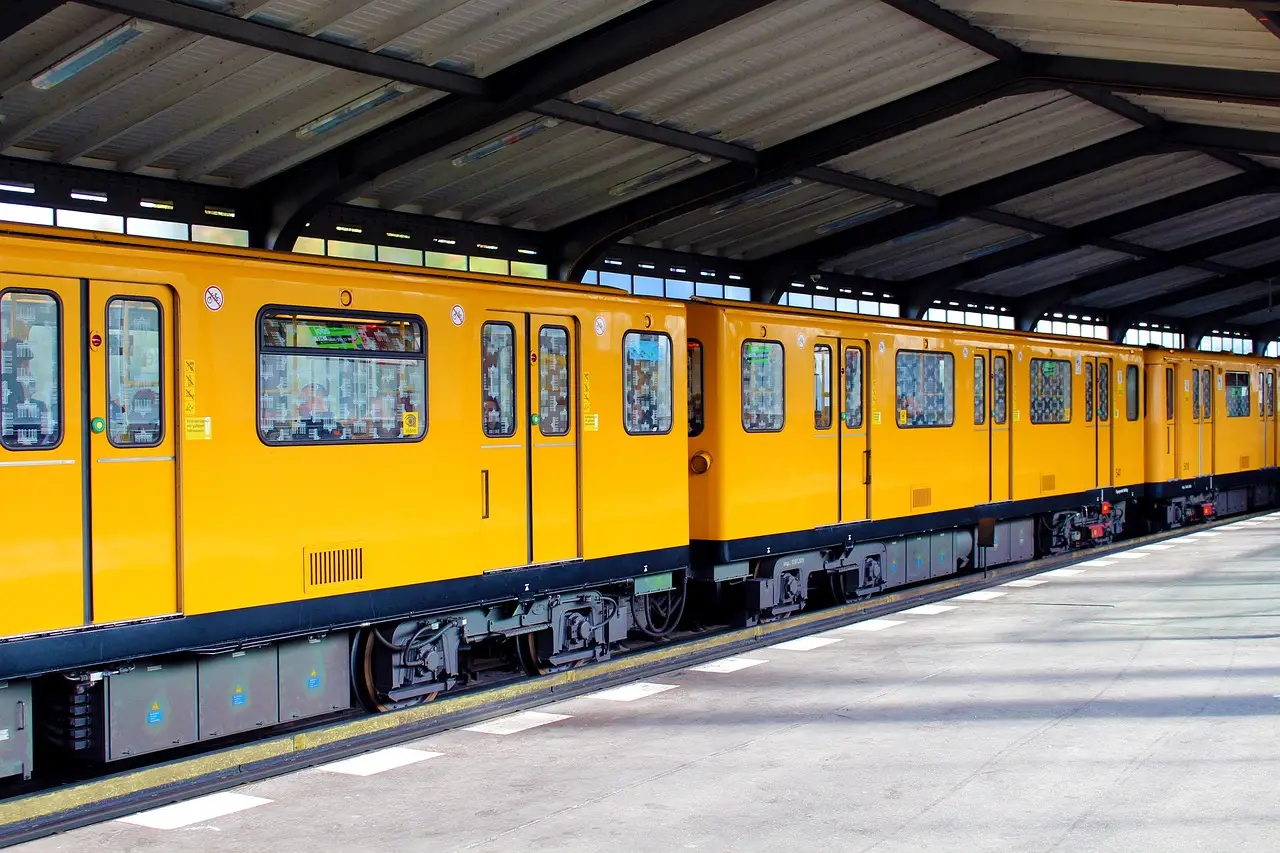
Berlin’s public transportation system is simultaneously a miracle of German efficiency and a maddening labyrinth of peculiar rules. After many years experiencing the urban development and transportation in this city, I’ve seen tourists frantically waving paper tickets at bus drivers who couldn’t care less and watched newcomers get slapped with juicy fines for honest mistakes that could have been easily avoided.
Let me cut through the confusion with some hard-earned wisdom about moving through the German capital without wasting money or precious time.
Berlin Public Transport Guide for Stress-Free Commuting
- 1. How to Choose the Right Ticket for Your Route
- 2. BVG App or Paper Ticket? What Locals Actually Use
- 3. U-Bahn, S-Bahn, Tram, Train or Bus: What's Best and When
- 4. How to Avoid Fines (Even If You're in a Hurry)
- 5. Tips for Smooth Transfers, Late Nights, and Rush Hour
- 6. Why Some Stations Are Worth Avoiding
- 7. Berliners' Favorite Transport Shortcuts
- 8. Moving with Kids, Bikes, or Pets on Berlin Transport
1. How to Choose the Right Ticket for Your Route
The Berlin transport system operates on an honor system with random checks – a fact that some visitors mistake as an invitation to fare-dodge. Don’t. Don’t be a dodger (Schwarzfahrer) Controllers are merciless and increasingly abundant. I dare you to argue with them using your poor German.
For most visitors, the options boil down to:
—Single tickets (€4) make sense only if you’re taking exactly one journey with no stops. Otherwise, you’re burning money.
—24 hours ticket (€11.20) become worthwhile after your third journey – and yes, that includes your return trip from the airport.
—The Deutschlandticket (€63 monthly), it is subscription-based (although you can cancel the subscription before the 10th of each month) and gives you unlimited access to all public transportation in Berlin and throughout Germany.
The Berlin WelcomeCard includes transport and museum discounts but rarely saves actual money unless you’re planning a cultural marathon.
*Tip: If you’re staying in central districts (Mitte, Prenzlauer Berg, Kreuzberg), you’ll need far fewer tickets than you think. Berlin’s center is eminently walkable and bikeable, and many tourists waste money on tickets for distances locals would never dream of riding.
2. BVG App or Paper Ticket? What Locals Actually Use
Despite Berlin’s reputation for technological resistance (try paying with a card at many restaurants), the BVG app has become the default for most residents. The days of queuing at temperamental ticket machines could be well most largely behind us.The app offers three crucial advantages:
- It remembers your payment details, saving you from fumbling for coins
- It eliminates validation anxiety – digital tickets are automatically valid
- It shows real-time disruptions and alternative routes
That said, the app requires a working phone and data connection. For airport arrivals with dead batteries or no local data, the machines still serve their purpose. Just remember to validate paper tickets in the small yellow or red boxes on platforms or trams before boarding – something I still see tourists forgetting weekly.
*Worth noting: Controllers now check digital tickets by scanning a QR code, not by taking your phone. The days of them scrolling through your private messages while “verifying” your ticket are (mostly) over, thankfully.
3. U-Bahn, S-Bahn, Tram, Train or Bus: What's Best and When
Each transit mode has its personality and purpose:
—U-Bahn (subway): The fastest option within the Ring, running frequently until around 12:30am (all night on weekends). Lines U1 through U4 are charming original tunnels with limited accessibility; newer lines are wheelchair-friendly.
—S-Bahn (urban rail): Perfect for longer cross-city journeys. The Ring line (S41/S42) circles the inner city and is your friend for reaching neighborhoods beyond tourist maps. Warning: Construction disruptions are a constant feature, not a bug.
—Trams: The network covers former East Berlin extensively. Faster than buses when they have dedicated lanes, and running all night on major routes.
—Buses: Often overlooked but crucial for neighborhoods without rail. The double-decker 100 and 200 routes offer better sightseeing than commercial tours at a fraction of the price.
—Regional trains: The secret weapon for distant suburbs. They’re covered by your standard ticket within city limits and often faster than S-Bahns on parallel routes.
-The dirty little secret: Despite the system’s reputation, delays are commonplace. Always add 10-15 minutes to Google’s estimated journey time, especially if your destination matters.
4. How to Avoid Fines (Even If You're in a Hurry)
I’ve witnessed countless tourists in tears after receiving €60 fines. Here’s how to avoid becoming another statistic:
- Buy your ticket before entering the platform or boarding. “My train was coming” is not an accepted excuse.
- Validate paper tickets immediately. The small yellow or red boxes are not optional decorations.
- Keep your ticket accessible until you exit the system entirely. Controllers often wait at station exits.
- If using a reduced fare ticket, carry the relevant ID. Student discounts require student ID, not just your word.
*What controllers won’t tell you: If you genuinely forgot to validate and are caught, playing the confused tourist sometimes works – or not. German is a complex language, after all. But don’t count on mercy, and never claim you “just boarded” if your shoes are dry during a rainstorm.
5. Tips for Smooth Transfers, Late Nights, and Rush Hour
Transfers in Berlin range from seamless to puzzlingly complex. Some hard-earned wisdom:
—For seamless connections, Alexanderplatz, Hauptbahnhof, and Friedrichstraße stations connect multiple lines but require lengthy walks between platforms. Budget at least 5 minutes for transfers.
—Late nights (after 12:30am Sunday-Thursday), the U-Bahn shuts down, replaced by night buses that follow similar routes with “N” prefixes. Weekend nights, everything runs 24 hours, though less frequently.
—During rush hour (8-9:30am, 4-7pm), the U2, U1, and Ring lines become exercises in involuntary intimacy. If personal space matters, wait for the next train or find alternative routes.
*A local hack: Key transfer points often have multiple exits. At major stations like Friedrichstraße, Alexanderplatz or Hauptbahnhof, choosing the correct exit can save 5+ minutes of walking. Most locals check the station maps thoroughly.
6. Why Some Stations Are Worth Avoiding
Not all stations are created equal. Some to approach with caution:
—Kottbusser Tor: A vibrant hub of Kreuzberg life but also home to open drug use and occasional harassment, especially late at night. Women travelers often prefer to transfer elsewhere after dark.
—Hermannstraße: The southern terminus of the U8 has a persistent reputation for pickpocketing. Keep valuables secure.
—Warschauer Straße: The crowds of party-seekers heading to RAW-Gelände and surrounding clubs make this station a chaotic experience, especially weekend nights.
—Alexanderplatz: Not dangerous but maddeningly confusing for transfers. The signage feels deliberately designed to lead you past as many shops as possible before reaching your platform.
*A fact: Despite these cautions, Berlin’s public transport is remarkably safe compared to many major cities. Violent crime is rare; your wallet is at greater risk than your person.
7. Berliners' Favorite Transport Shortcuts
After years observing commuter patterns, these are the insider moves that separate locals from tourists:
- Use the “Ringbahn” (S41/S42) to avoid congested central connections when traveling between outer neighborhoods
- The M10 tram provides a scenic alternative to the U2 between Warschauer Straße and Nordbahnhof
- For Tegel residents mourning their former airport, the TXL bus route has been reborn as the faster and less crowded 125
- At Hauptbahnhof, using the side entrances on Europaplatz saves fighting through the commercial maze of the main hall
*The shortcut least thought of: Berlin’s public bikes (NextBike, TIER) are often faster than public transport for 2-3km journeys in good weather, with the added benefit of seeing the city at ground level. Read more about cycling in Berlin.
8. Moving with Kids, Bikes, or Pets on Berlin Transport
—With children: Kids under 6 travel free. Strollers are permitted on all services, though older U-Bahn stations lack elevators. Fellow passengers generally help with stairs if asked.
—With bikes: Bicycles require a special ticket (€2.50) and are officially banned during rush hours (though enforcement is spotty). S-Bahns have dedicated bike compartments; buses technically allow bikes but drivers may refuse if crowded.
—With pets: Small animals in carriers travel free. Larger dogs need a reduced fare ticket (use the apps to buy them) and should be leashed and muzzled. Despite official rules, enforcement varies widely based on the individual driver’s mood.
-The reality: Berlin’s system was not designed with accessibility as a priority. Despite improvements, travelers with mobility challenges should check the BVG app for elevator status before planning routes, for breakdowns are frustratingly common.
—If you’re still deciding where to live in Berlin, your commute is a key factor. Read our Berlin neighborhood guide to find the area that matches your lifestyle and your route.
Conclusion
Berlin’s transportation system embodies the city itself: Efficiently chaotic, frustratingly functional, and ultimately rewarding once you decipher its peculiarities.
While Deutsche Pünktlichkeit (German punctuality) may seem more myth than reality when you’re standing on a freezing platform watching the minutes tick by, the system will eventually get you where you need to go.
Just remember to validate your ticket, even when no one’s watching. Because in Berlin, someone usually is. Pack your patience along with your documents. You’ll need both.
Author: Christian Dittmann —Graphic Designer, Writer, Musician, Entrepreneur, Expat in Berlin.

Share this post using: