
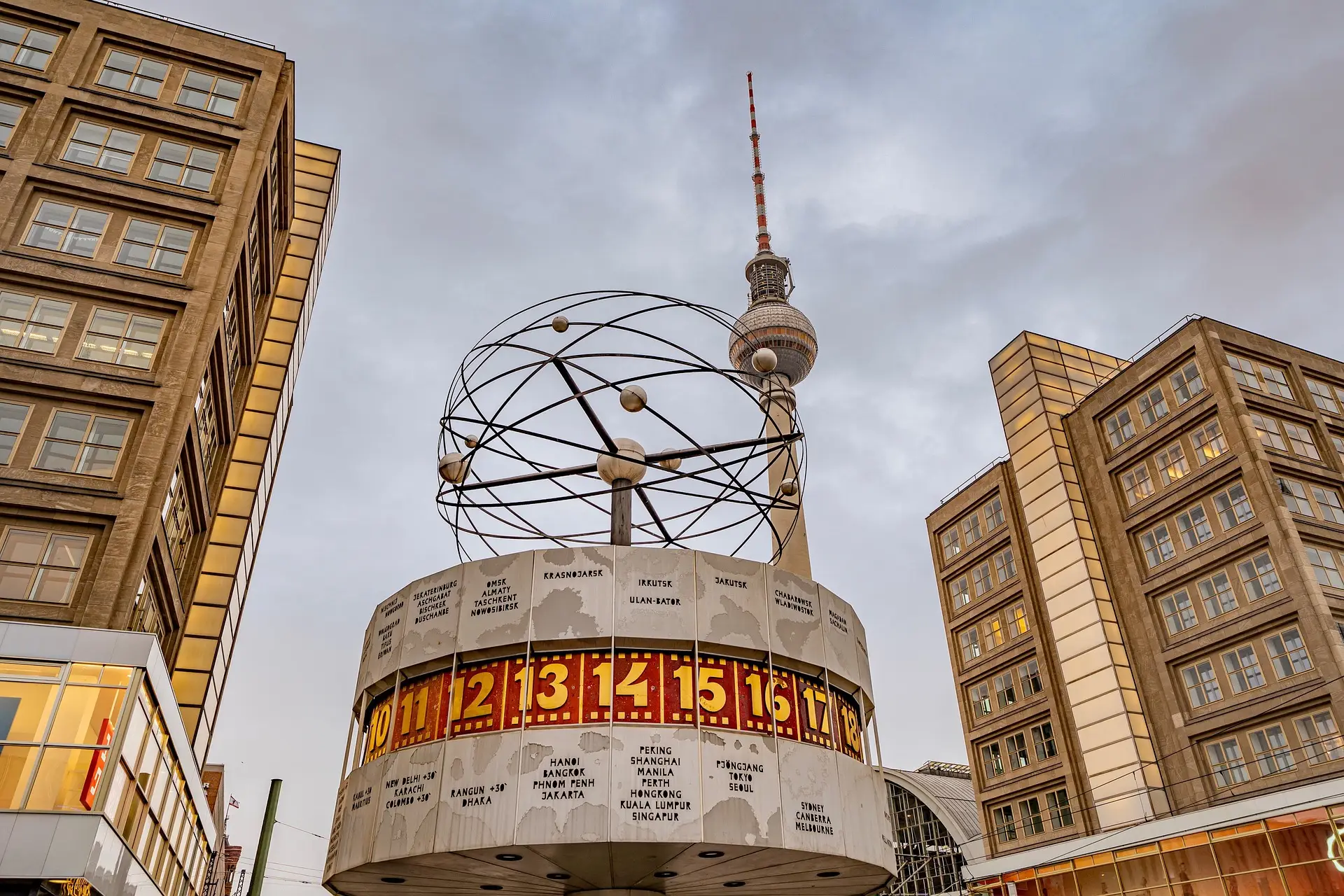
10 Essential Tasks Upon Arrival in Berlin
- 1. Secure a German SIM Card
- 2. Obtain Public Transportation Coverage
- 3. Secure Temporary or Permanent Housing
- 4. Complete Your Anmeldung (Address Registration)
- 5. Open a German Bank Account
- 6. Arrange Health Insurance
- 7. Obtain Your Tax Identification Number (Steuer-ID)
- 8. Register with the Employment Agency (If Job-Seeking)
- 9. Digitize Essential Documents and Create a Filing System
- 10. Connect with Expatriate and Local Communities
1. Secure a German SIM Card
- The moment you walk out of the airport, get a German number. Without it, you won’t be able to receive SMS codes for apartment applications, banking setup, or delivery registrations. You’re off the grid. Go straight to an ALDI, Lidl, or a larger REWE branch with a service desk and buy a prepaid SIM. You will find the SIM cards in the checkout area —ALDI Talk is easiest and widely recommended for new arrivals. If you’re ready to commit to a contract, consider Vodafone or o2 for better data, but expect a 24-month commitment and credit checks.
Action: Bring your passport to activate the SIM (German law requires ID verification). Budget €15–25/month. Use your international data plan until activation completes, which can take 15–60 minutes after registration via their app or web portal.
2. Obtain Public Transportation Coverage
The €63/month Deutschlandticket (subscription with the option to cancel monthly) is your key to navigating Berlin —and it works nationwide on regional trains. Without it, you’ll burn cash fast: €4 per ride adds up fast even on short hops. Download the BVG or DB Navigator app (not the same) and register with your new German number and a payment method (German bank card preferred).
Action: Get a monthly subscription instead of daily tickets. Even if your address isn’t registered yet, you can input temporary details. Read this article about Berlin transport system.
3. Secure Temporary or Permanent Housing
If you don’t already have a long-term place, prioritize finding a roof over your head —hostels, sublets, or serviced apartments like Wunderflats or Craigslist. Join Telegram groups, browse WG-Gesucht daily, and respond immediately to listings. Don’t expect responses from landlords without a German number, income proof, and sometimes even SCHUFA (credit report).
Action: Set up daily alerts, create a pre-written message in German and English, and have these ready to attach: Passport scan, proof of funds or employment, and a short intro letter. Apply within minutes of postings going up to increase your odds. Check this article on how to find a flat in Berlin before everybody else.
4. Complete Your Anmeldung (Address Registration)
This is non-negotiable. You need this piece of paper to unlock German life —banking, health insurance, job contracts, even gym memberships. Once you’ve secured an address, go to berlin.de and look for Bürgeramt appointments. You’ll need a rental contract, your passport, and a signed Wohnungsgeberbestätigung (landlord’s written confirmation of your move-in).
Action: Search multiple districts for earlier slots. Check at 7am daily for cancellations. If you’re in a hurry, try early walk-ins at less busy Bürgerämter (Hohenschönhausen, Tempelhof, Reinickendorf, Lankwitz, Tiergarten). Bring physical copies of all documents, printed —not digital.
—Here’s a guide on how to book online an appointment for the Anmeldung. If you wnat a helping hand with this task, find assistance on the Marketplace with the Anmeldung process.
After completing your Anmeldung, make sure your name is clearly labeled on your building’s mailbox, doorbell, and department doorbell. This is crucial in Germany — official mail like your tax ID, insurance documents, and bank cards won’t be delivered unless your name matches what’s on file. If it’s a shared flat, ask your flatmates or landlord to add your name right away.
5. Open a German Bank Account
A local bank account is essential for rent, utilities, job payments, and subscription services. N26 and bunq offer an English-language interface and same-day digital setup. Traditional banks like Deutsche Bank or Commerzbank require an in-person visit for non-German residents and can be slower but are more widely accepted. Get assistance with your Bank appointment.
Action: Don’t attempt to open an account without your Anmeldung document. For speed, start with N26, bunq or Vivid. For credibility with landlords and employers, open a traditional bank account once you’ve settled. Make sure your name is on the mailbox to receive your debit card.
6. Arrange Health Insurance
You can’t legally work or stay long-term without insurance. If employed, public options (TK, AOK, Barmer) are standard and cost-shared. Freelancers and students pay the full amount —€400–€500/month. Start this process early. Some insurers won’t onboard you without your Anmeldung and visa status already sorted. Learn the difference between public and private insurance.
Action: Apply online with a certified provider or use Feather or Mawista as a temporary bridge. Keep screenshots of your application in case your visa interview or employer needs proof. Confirm they issue a certificate (Mitgliedsbescheinigung) —this is mandatory paperwork for contracts.
7. Obtain Your Tax Identification Number (Steuer-ID)
Your tax identification number arrives by post 1–2 weeks after your Anmeldung, so make sure your name is on your mailbox and your address is written correctly. Without it, your employer can’t pay you properly —they’ll deduct the highest tax rate by default. Learn about German taxes here.
Action: If it doesn’t arrive after 14 days, visit your local Finanzamt with your passport and Anmeldung to request it. Keep a digital copy saved and send it to HR as soon as you get it. Find help on the Marketplace with the Finanzamt visit.
8. Register with the Employment Agency (If Job-Seeking)
Registering with the Agentur für Arbeit is especially important for visa renewals, job-seeking benefits (if eligible), or career guidance. You’ll get documentation that confirms your intent and status, which can help with visa applications or health insurance registration as a freelancer.
Action: Create an account at the website of the Arbeitsagentur, then schedule a Beratungsgespräch (advisory meeting). Bring your CV and a translated version if needed. Ask for written proof of registration (Meldebescheinigung zur Arbeitssuche). Find help on the Marketplace for this interview.
9. Digitize Essential Documents and Create a Filing System
Every process in Germany involves paper. Keep both physical copies and well-organized digital folders. Key items: Passport, visa, Anmeldung, insurance documents, bank details, employment letters, rental agreements, and tax records.
Action: Use Google Drive or Dropbox with labeled folders by category. Scan all documents at 300dpi, and name files clearly (e.g., “Passport_Name.pdf”). For physical copies, buy a binder with dividers and label each section in both English and German for ease.
10. Connect with Expatriate and Local Communities
Berlin’s bureaucracy can feel cold, but your real support will come from people who’ve just been through it. Join Facebook groups like “Berlin Expats,” “Freelancers in Berlin,” and look for local meetups, and networking events.
Action: Attend one in-person event within your first two weeks. Start by commenting or asking a question in a group to build familiarity. Locals and expats often share up-to-date intel like which Bürgeramt has open slots, which banks are easiest, or where to find quick short-term housing. For a different angle, read our Berlin relocation overview before you make common mistakes.
Wrapping it up
Berlin’s administrative systems operate on assumptions about time, knowledge, and preparation that newcomers rarely possess. The city remains defiantly analog in many processes, requiring physical presence, original documentation, and stamped paperwork.
Those who approach these tasks systematically typically establish functional lives within 4-6 weeks. Those who fail to prioritize them often find themselves trapped in a catch of administrative roadblocks months after arrival.
This isn’t the romantic Berlin of the early 1920s, but mastering these fundamentals creates the foundation for everything that follows. Consider this your essential blueprint: The difference between thriving and merely surviving in Europe’s most deceptively complex capital.
Author: Christian Dittmann —Graphic Designer, Writer, Musician, Entrepreneur, Expat in Berlin.

Share this post using: